The Registered Park & Garden
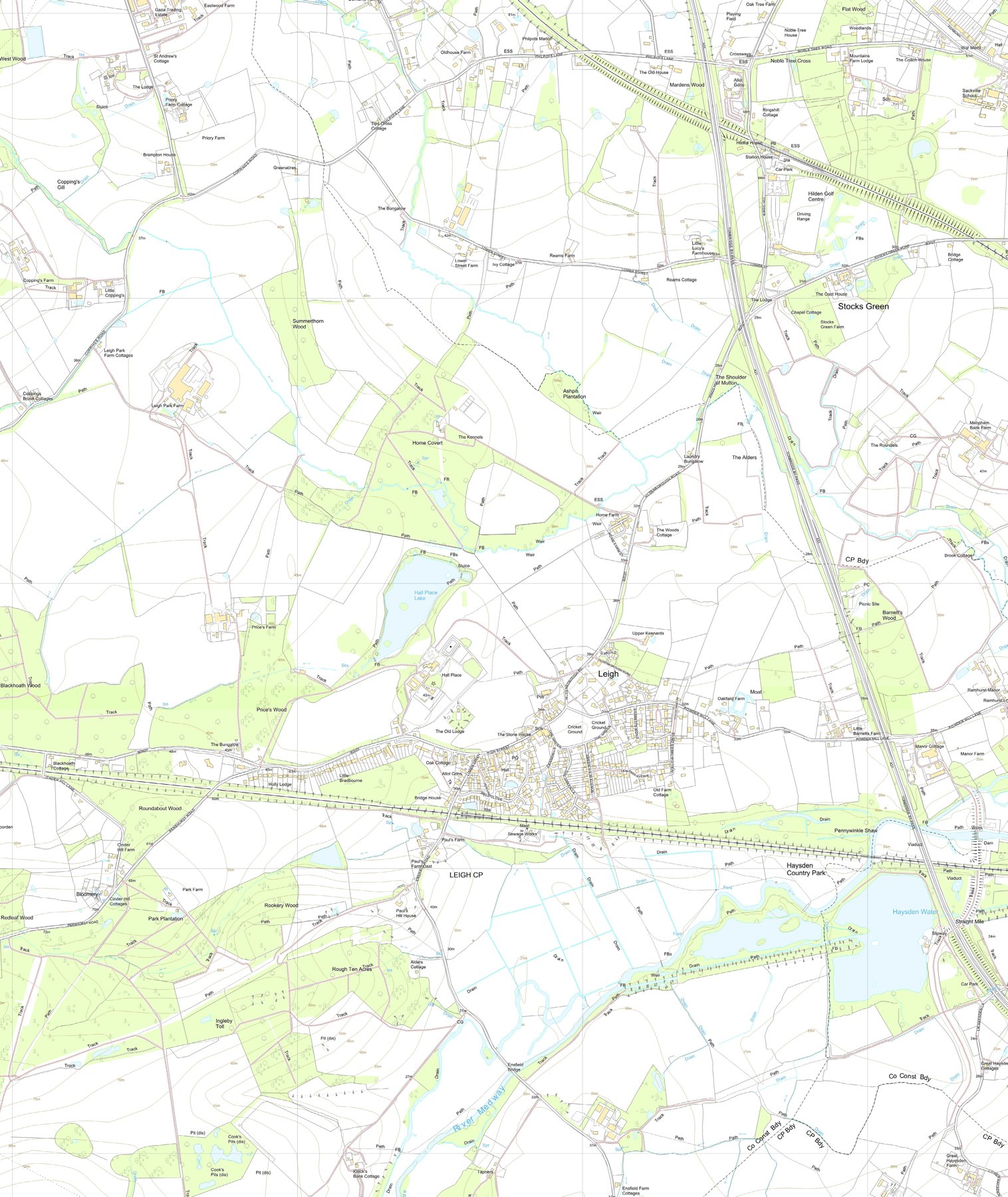
On the estate’s western side, beyond the drive, the ground changes register. Here the landscape is not composed but inherited: a wood with its own bank, its own coppice cycles and its own quiet, where the garden gives way to something older. Price’s Wood is the estate’s wildest ground — part pleasure grounds gone native, part working coppice, part probable ancient woodland — and it carries the strongest nature-conservation story on the estate.
The lodge and the drive
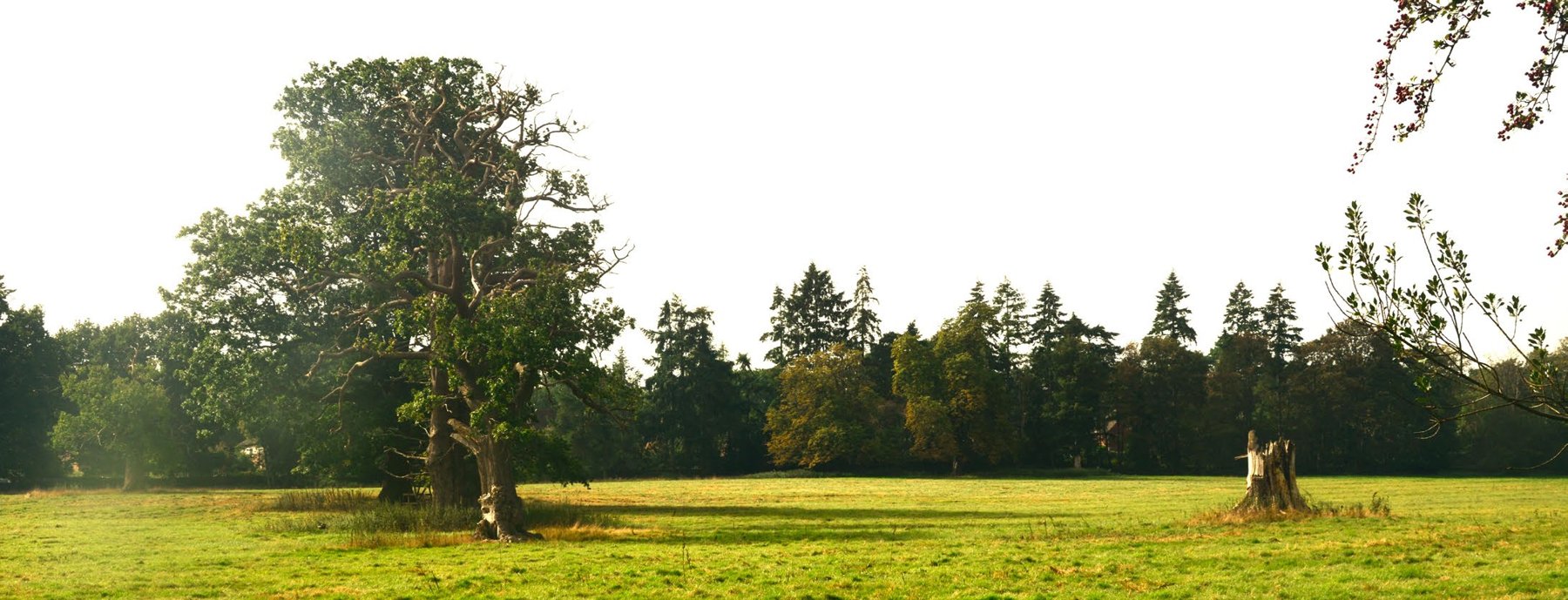
The West Drive begins at Penshurst Lodge, where the estate meets the Penshurst road. George Devey designed this lodge and its gateway himself — unlike East Lodge and Old Lodge, which came from Charles Baily — and its scale is deliberately reduced, its architecture less imposing, but its pedigree unmistakable. Tudor-arched gates, their openwork gothic tracery set into stone dressings and hood moulds, lead the way; the carved spandrels repeat the Tudor rose and the leopard’s head found elsewhere on the estate’s buildings; and the lodge exhibits the mix of vernacular forms and materials for which Devey was renowned. The lodge itself left the family’s hands in the mid-twentieth century; its gateway and flanking walls, listed in their own right, remain. From the lodge, the drive runs north between the wood and the water meadows of the lake’s southern end, past the wood’s horse chestnut avenue, one of three great chestnut avenues on the estate.
Inside the wood
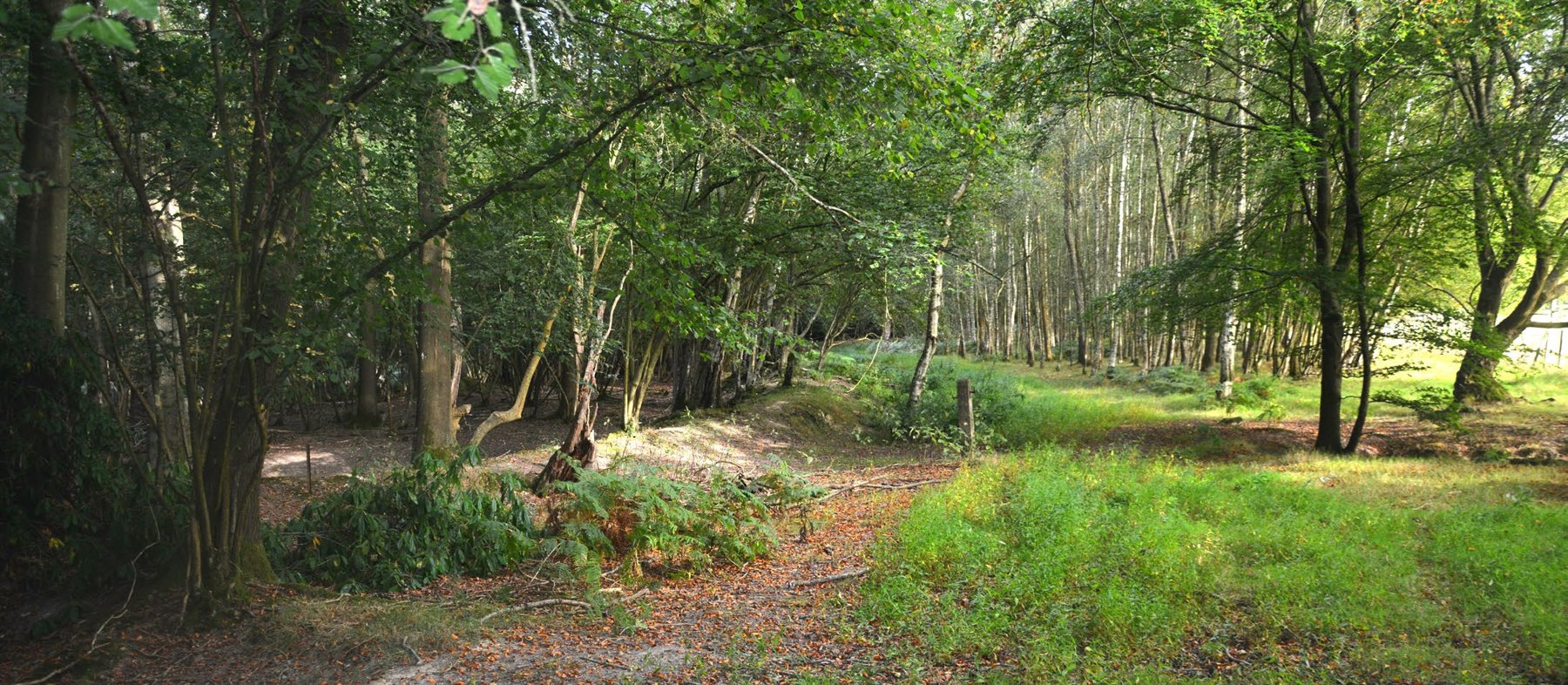
Price’s Wood is three things at once. Its central and south-western parts are true woodland: remnant sweet chestnut coppice growing beneath standards of oak, sweet chestnut and beech, with pine and larch scattered above a patchy understorey. Its northern end opens out, with scattered mature oak and beech over hazel and birch, bracken and bluebells running through the ground flora. And along its eastern edge — the side facing the drive — it is abandoned pleasure grounds: clumps of mature yew planted against the chestnut avenue, lime coppice fringing the yews, and great banks of rhododendron that have quietly annexed the understorey. Two fine beech veterans grow deep within that rhododendron, hidden from anything but the most determined visitor.
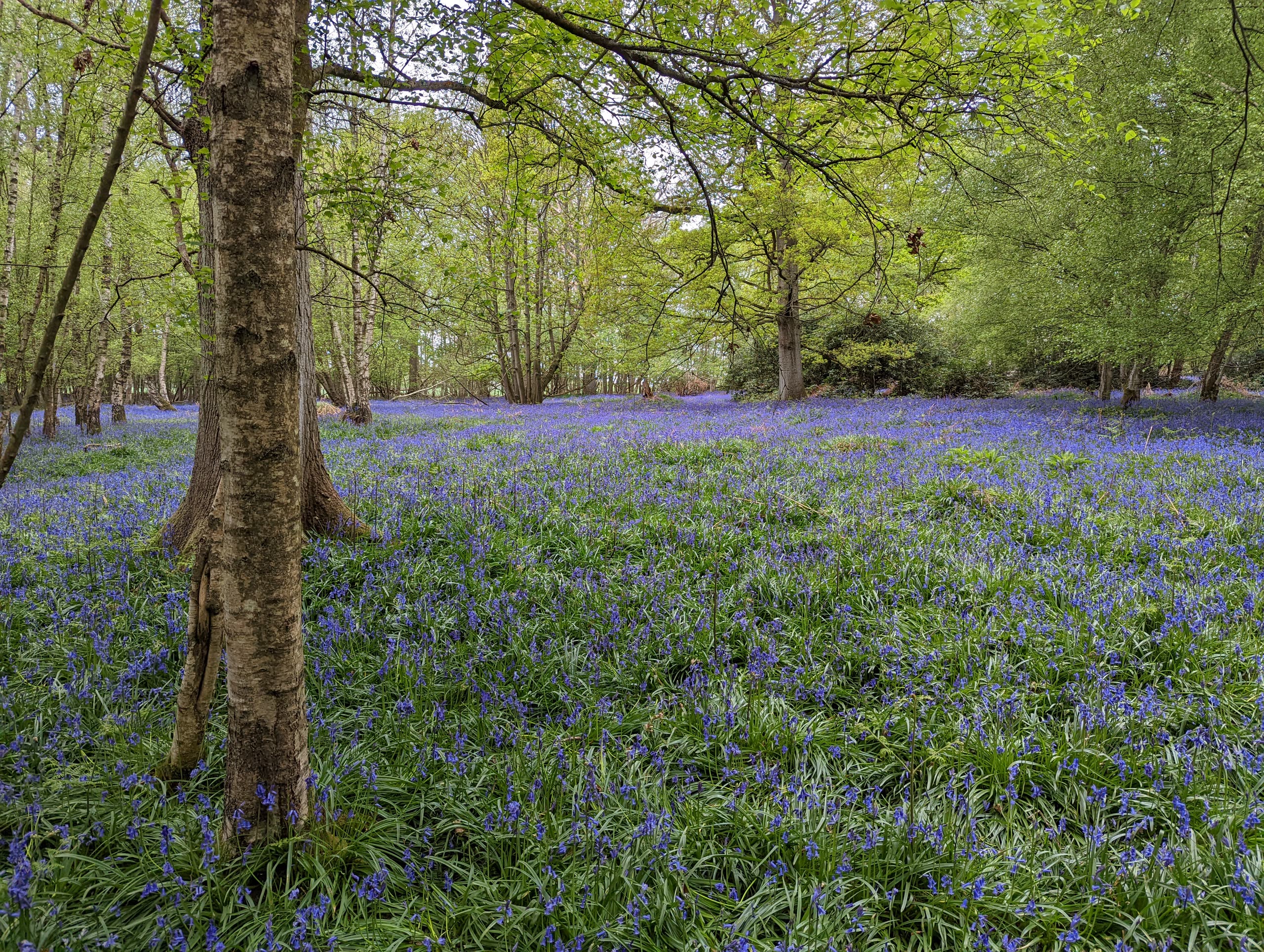
The wood’s antiquity is written into its boundaries. A woodbank — a bank and ditch predating the 1870s mapping — runs around its northern and western sides, and a park pale follows the western edge above the old farm track, tracing the estate’s boundary line. In the north, hazel coppice survives over bluebell, bracken and wild garlic, and stinking helleborine has been recorded here — an unglamorous name for a distinctive plant of old woodland margins. Within the wood a small oval pond, likely an old extraction pit with a tree growing from its centre, gathers water in the hollows. The estate’s records identify the whole as probable ancient semi-natural woodland — ground that has been wooded since long before any map drew it — and the management plan classifies its plant communities accordingly.
A refuge for wildlife
For the estate’s wilder residents, Price’s Wood is the stronghold. Abandoned coppice offers some of the best hazel dormouse habitat on the site — though no dormice have yet been recorded within a kilometre, the woodland’s connectivity northwards towards Home Covert gives them, and other species, a corridor to work along. Bat records are remarkable: eleven of Kent’s sixteen bat species — among them serotine, Bechstein’s, Daubenton’s, Natterer’s, noctule, the two pipistrelles and the brown long-eared — have been found within five kilometres, and a roost is recorded within the park itself, at the cedar avenue. Trees with roost potential are flagged individually in the estate’s tree survey, so that any future works know exactly which hollows matter.
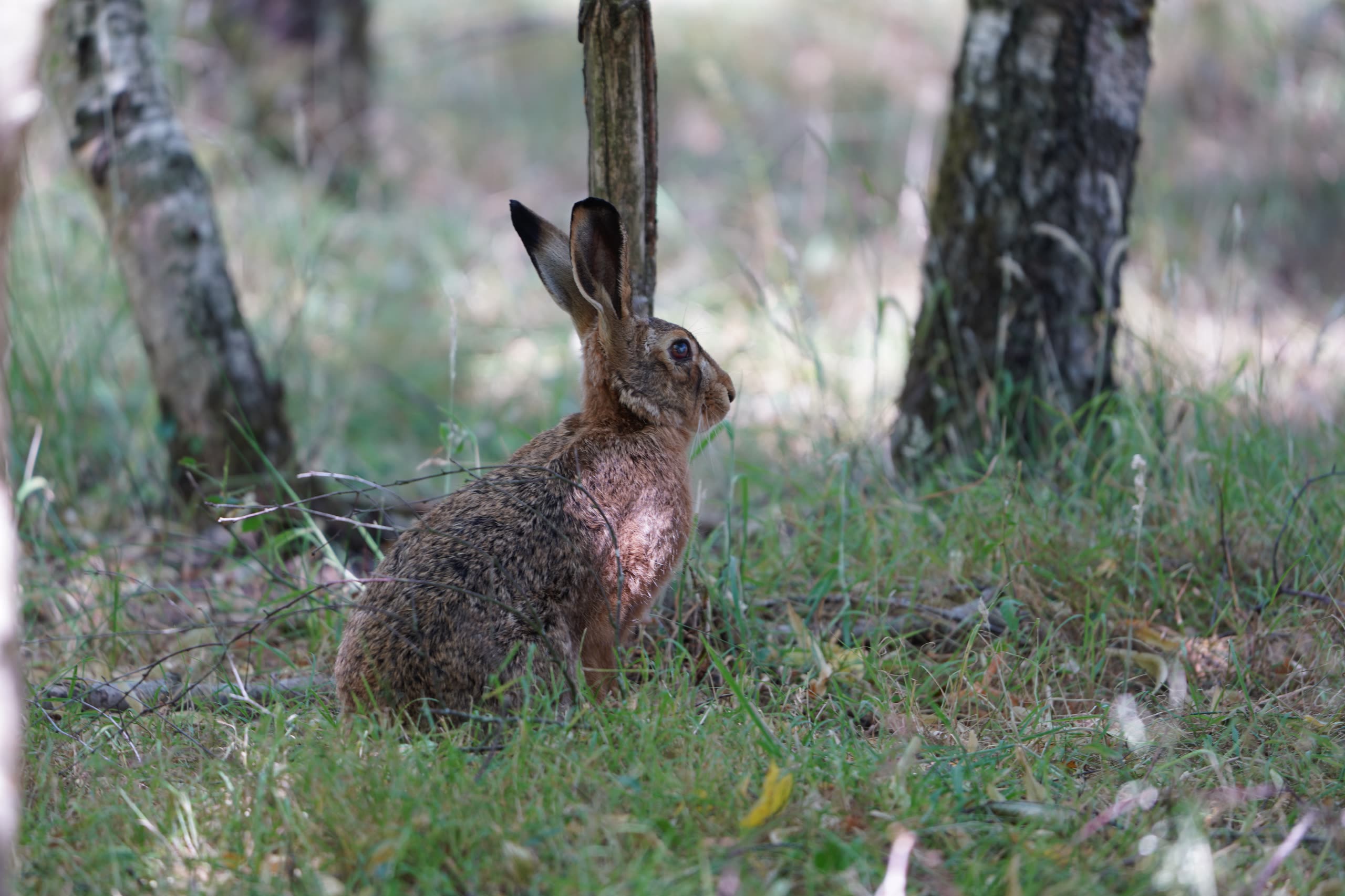
Badgers range across the estate’s gardens — the largest sett sits in the Pavilion Garden — and the wood’s edges carry their foraging paths. The old limes of the Wild Garden, densely hung with mistletoe, the native wood spurge patching the garden lawns, and the sweet vernal-grass and field woodrush of the lakeside grass all belong to the same picture: a place where ornamental planting and native flora have interwoven over a century and a half.
The estate’s conservation ledger
Taken across the whole site, the estate’s nature conservation value is honestly assessed as low today but medium-high in potential. The gardens and the ornamental park hold more veteran trees and more veteran habitats than the open park; the lake’s water quality is good even where its banks need repair; and the woodland’s unmanaged coppice is an asset waiting for a cycle to return. Countryside Stewardship options for wood pasture already shape the estate’s management plans, and standing and fallen dead wood — often tidied away elsewhere — is treated here as the positive feature it is.
North of the wood, the wider registered landscape continues: Home Covert and the old kennels stand beyond the boundary, its edges marked by the remains of nineteenth-century deer fencing. The estate’s survey found the wood’s good areas of ground flora and unmanaged coppice among its strongest assets, needing only the return of a cutting cycle to resume their old rhythm.
The estate’s day-to-day care of all this falls to two part-time gardeners, who keep the mown lawns at a relaxed 100 to 150 millimetres and leave the great bluebell areas uncut until early summer, letting them seed before the mower returns. It is a modest regime, and a deliberate one: the wild character that makes the wood and its edges what they are is precisely what restraint preserves. Fences are the visible weak point — the estate’s boundary stock is in poor condition, with repairs in hand — but the substance behind them, the ancient bank, the coppice, the veterans and the helleborine, needs only time and light-touch management to keep doing what it has done for centuries: quietly being the wildest, oldest thing on the estate. Visit in May and the ground flora is at its best — bluebells under the standards, wild garlic scenting the northern hollows, bracken just unrolling — while high summer belongs to the rhododendron banks and the deep shade of the yews. Either way, the wood keeps its own calendar, indifferent to the gardens’ timetable.
The estate’s woodland and parkland management is supported by a Higher Tier Countryside Stewardship scheme, entered in 2024 — part of the long-term care of Price’s Wood and its ground flora.
This page draws on the estate’s Conservation Management Plan (2023) and the National Heritage List entries for Hall Place and its registered park.