Post-war
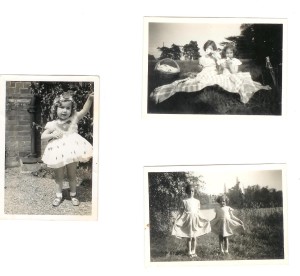
When Eric and Kath Bridgen arrived at Hall Place in 1950, they brought with them two young children: Ian, then a small boy, and his baby sister Sue, who was only two years old. The family took up residence in the Chauffeur's Cottage among the stables, for Eric had been engaged as chauffeur to Lord Geoffrey Hollenden. It was a position he would hold for twenty-three years, though motoring was not his first experience of service — before coming to the estate he had driven for the Cazlett family at Fairlawn in Shipbourne.
For Sue, Hall Place was simply home, and her memories of the place stretch from those earliest days until her marriage in 1970. Growing up there meant growing up among the people who kept the great house running, and the estate community of those years was a close one.
In the stables, the Bridgens' next-door neighbours were Mr and Mrs Hand, an older couple who had by then finished their working days on the Estate. Sue was a nervous child in a thunderstorm, and she would creep next door and hide under the Hands' kitchen table until the weather passed. It was, she recalls, a comforting refuge.
Another familiar figure was Percy Seal, who drove the truck that collected timber and building materials around the estate. A ride in the back of Percy's truck was a treat for a small girl, and Sue remembered the excitement of bumping along with her cargo of a very different kind.
The gardens and grounds supported a whole workforce. Len Humphrey and Bernard Pankhurst were the carpenters at Hall Place, while Jack Jury was one of the gardeners. Jack and his wife Grace lived at The Bothy, and they had no children of their own — a fact that seems to have made them especially fond of the Bridgen children. Jack worked mainly in the walled vegetable garden, and he carried on tending it well into the 1970s. Beneath The Bothy he kept a shed, and there he passed his spare hours making things out of wood.
It was with Grace Jury, though, that Sue enjoyed some of her happiest times. Each spring the two of them would go out together picking primroses and bluebells, and Mrs Jury would prepare picnics for these flower-picking expeditions. Grace also worked as a cleaner for the Haslam family in Penshurst Road, whose daughter Sally was about the same age as Sue, so the two households were linked by more than one thread.
The estate itself held plenty of places of wonder for a child. In the woods stood the Little Chapel, built for Lady Diana Hollenden, and Sue's mother kept the key to it — a small responsibility that must have made the chapel feel particularly special. Lady Diana took a personal interest in the children of her husband's staff: it was she who bought Sue her first dolls pram, a gift long remembered.
The park at Hall Place was home to deer, which roamed freely across the ground, and venison from the culling of the herd found its way to the table. The Hollendens themselves were not always in residence; they stayed at their London house from Monday to Friday, so the estate had a different rhythm at weekends when the family was in the country. Sue's mother had duties of her own beyond the household, for she cared for the labradors housed in the Kennels.
Life at Hall Place had a self-sufficiency that would be unrecognisable today. Cows at Home Farm supplied fresh milk to the big house, and Betty was the cook there, producing meals from the estate's own produce. Modern conveniences arrived unevenly, however: Hall Place had a refrigerator before the Bridgens' own cottage did, and Sue was nine or ten years old before her family finally had one of their own.
In time, new neighbours arrived at the Gardener's House, which stood opposite Donkey Field. Audrey and Peter Beagley moved in, and Peter became Head Gardener. They had two children, Glyn and Susan, and Sue Beagley still lives in the village today. Another household within the big house itself was that of Tom and Jean McKenzie; Tom was the Butler, and the couple had two children, a boy and a daughter named Clare.
Sue's childhood at Hall Place ended in 1970, when she married John Stevens. But the years that followed brought sadness to the family. Sue's mother fell ill, and it was Jean McKenzie who came to help Kath through that difficult time. Despite such care, Kath died in 1973, aged 56, after suffering from lung cancer. Her death followed closely on other changes at the top of the estate: Lady Diana Hollenden had died a few years before 1973, and Lord Hollenden had since remarried, his new wife being Lady Anne.
Lord Hollenden was now preparing to leave Hall Place altogether and move to South Devon. For the household staff, this raised hard questions. Eric Bridgen, who had served the family faithfully for twenty-three years, declined to relocate with them to Devon, and as a result he was made redundant. It was a quiet end to a long career of loyal service, and a reminder of how the lives of estate families were bound up with those of their employers.
Sue's story is a child's-eye view of a vanished way of life — the walled garden and the Bothy shed, the truck rides and spring flowers, the chapel in the woods and the deer in the park. Hall Place in the 1950s and 1960s was not just a great house but a working community, and for one little girl who grew up in the Chauffeur's Cottage, it was simply the whole world.