The pub’s story
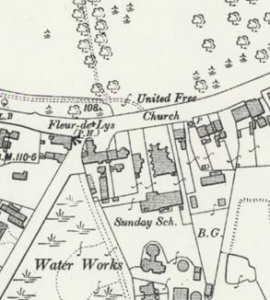
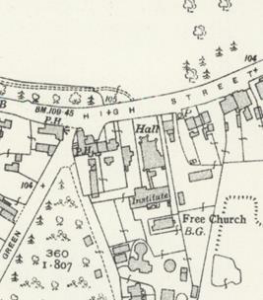
The Fleur de Lis stands at the corner of Leigh High Street and Lower Green — a Grade II listed pub in the brick-and-timber dress of the estate village around it. It began life not as a public house at all, but as four estate cottages built for Hall Place in 1855. What follows is how the cottages became the pub, and who kept it across the century and a half since.
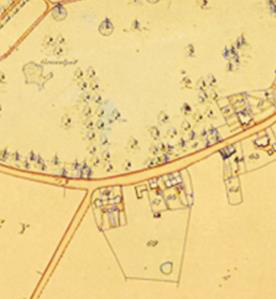
1855 — the Bailey cottages
In 1855 Thomas Bailey of Hall Place built four cottages on the corner plot where the High Street meets Lower Green. They were dressed in the Tudor revival style then in fashion — steep gables, half-timbering, stone-mullioned windows — the same architectural language the estate was using across the village, and the same that would shortly be applied to the rebuilding of Hall Place itself. The carved datestone carries a leopard’s head taken from the Bailey coat of arms; the fleur-de-lis that gives the pub its name comes from the same arms. It was a busy year on the estate: the front of Home Farm was rebuilt the same year, dated 1855, and Laundry Cottage went up as the estate bakery. The new cottages were let to yearly tenants, with gardens and — a nice survival of estate economy — a shared bake-oven for their joint use.
1870 — the sale, and the brewers
When the Hall Place Estate was sold in 1870, the cottages formed Lot 7 of the particulars: “four highly ornamental and well built cottage dwellings, brick and tile, with gables, half timbered with gardens.” The buyer was Bartrum and Co., brewers of Tonbridge. The two cottages to the east were later sold on to Samuel Morley, owner of the Hall Place Estate from 1870; the pub side passed into brewery hands for the next century and more.
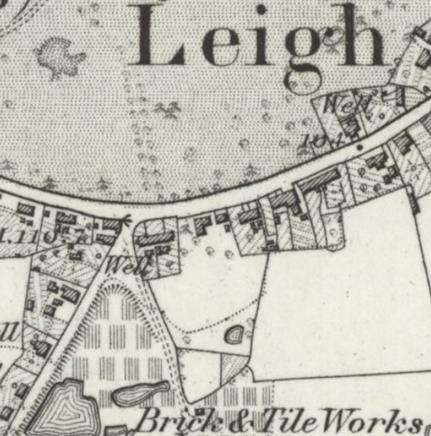
A pub within two years
The conversion was quick. The westernmost cottage was extended by a new wing in the style of the original, and it and its neighbour were licensed: the new public house took over the licence of the Porcupine — the old Goat’s Head — and traded at first as the New Goat’s Head before settling on the name it has kept ever since, the Fleur de Lis. An 1872 drainage survey already records a publican, Martin, in residence, with the outbuildings guttered and drained. There is a neat logic to the naming: the goat’s head of the old licence and the fleur-de-lis of the new name both come from the Bailey coat of arms — the pub ended up wearing the heraldry of the family that built the village.
Licensees through the years
Trade directories and parish records preserve the names of the landlords and licensees:
- c.1872 Martin (recorded at the New Goat’s Head in the 1872 drainage survey)
- 1882 Luke Weston
- 1891 John Richardson
- 1899–1903 Stephen R. Bing-Foord — his advertisements offered dinners for cyclists and promised splendid fishing nearby
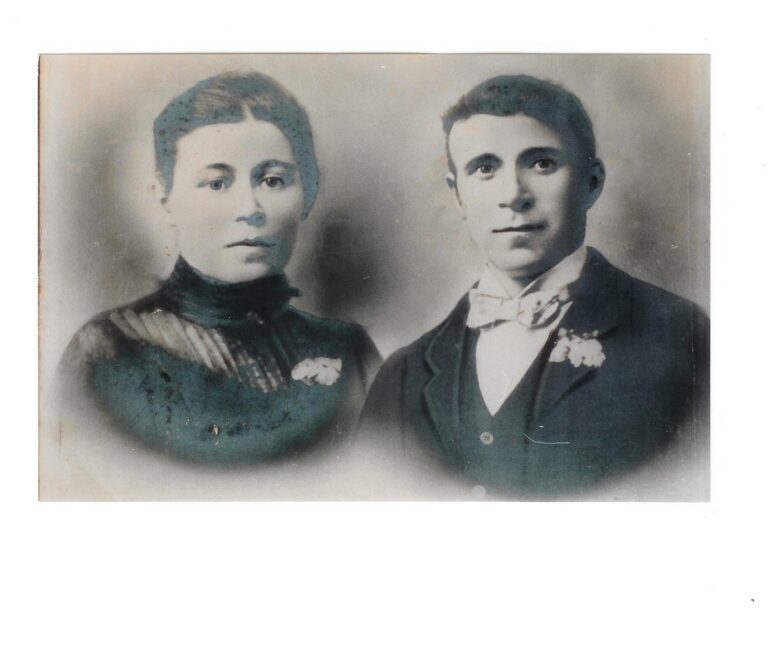
- 1911–1921 James Henry and Polly Jones — the pub then belonged to the Dartford Brewery; their daughter was born at the hotel in 1920
- 1922 Richard Albert Smith
- mid-1920s Mr Offen
- 1930s Florence and Tommy Coates
- 1952 Grace and Albert Grantham
Later decades brought further hands at the till, down to the recent past; throughout, the Fleur kept its place as the village’s local. During the Second World War the village’s special constables are remembered holding their meetings at the bar.
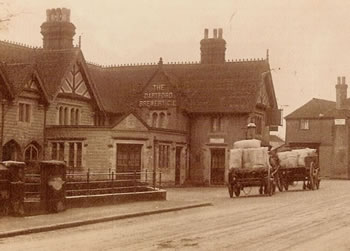
The building
The building that grew out of the cottages is a textbook of mid-Victorian estate architecture: red stock brick banded with grey and blue headers, sandstone dressings around the stone-mullioned windows, steep roofs of Kent peg tiles, tall brick chimneys with oversailing courses, and gables finished with finials and kneelers. The 1870 wing matches the original so closely that only a subtle difference in the brickwork gives it away. Behind the show front, flat-roofed extensions were added through the twentieth century, and the rear elevation — always the working side of the building — is plainly detailed, its first floor lit by multi-pane casements. Much has changed inside over the decades, but survivors include the matchboard dado panelling installed at the 1870 conversion and the first-floor function room built in the 1870 extension, by common consent the finest room in the building.
The village local
A pub is more than its fabric. The Fleur de Lis has been the village’s meeting place for generations, and that role is formally recognised: the building was listed Grade II in January 1975, together with Fleur-de-Lis Cottages and in group with the British Legion hall and the old village hall on the green, and in December 2025 it was registered as an Asset of Community Value by Sevenoaks District Council. After decades of patch-and-mend, the Fleur is now closed for a thorough programme of repair, conservation and rebuilding — the biggest investment the building has seen in generations — ahead of reopening as the village local again. Progress and reopening news live on the Fleur’s own site.
Drawn from the estate’s records, published village histories and trade directories.